


How to choose the right rug for rain, wind, cold and stormy UK conditions
When the forecast turns and the wind picks up, your horse’s rug is the first line of defence against the elements. But choosing the right turnout rug isn’t just about picking a weight and hoping for the best. The UK’s weather is notoriously unpredictable - a mild, drizzly morning can shift to driving rain and bitter wind by lunchtime - and it’s in those conditions that you really find out whether a rug is doing its job.
In this guide, we explain the science behind how horse rug waterproofing and breathability actually work, what the technical ratings mean in real terms, and how to make better rugging decisions when the weather turns. Whether you’re dealing with relentless autumn rain, winter storms or those tricky in-between days, understanding how your rug performs will help you keep your horse comfortable and dry - without the panic of constant rug changes.
Why Weather Performance Matters More Than Rug Weight Alone
It’s easy to fall into the habit of choosing a rug based on its gram weight alone. And while fill weight is important for warmth, it tells you very little about how a rug will perform when the weather really tests it. A 200g rug might keep your horse perfectly warm on a still, dry winter’s day - but add driving rain and a 40mph wind, and the picture changes completely.
Wind chill, prolonged rain and high humidity all affect how much heat your horse loses. A combination of wet and windy conditions at 8°C can cause far more chilling than a calm, dry day at 2°C. That’s why it’s worth thinking about weather performance - waterproofing, breathability, fit and stability - as much as you think about warmth.
Understanding this distinction helps you make smarter decisions, reduces the temptation to over-rug in mild but wet weather, and means you’re less likely to find yourself making an extra trip to the yard to swap rugs.
How Horse Rug Waterproofing Actually Works
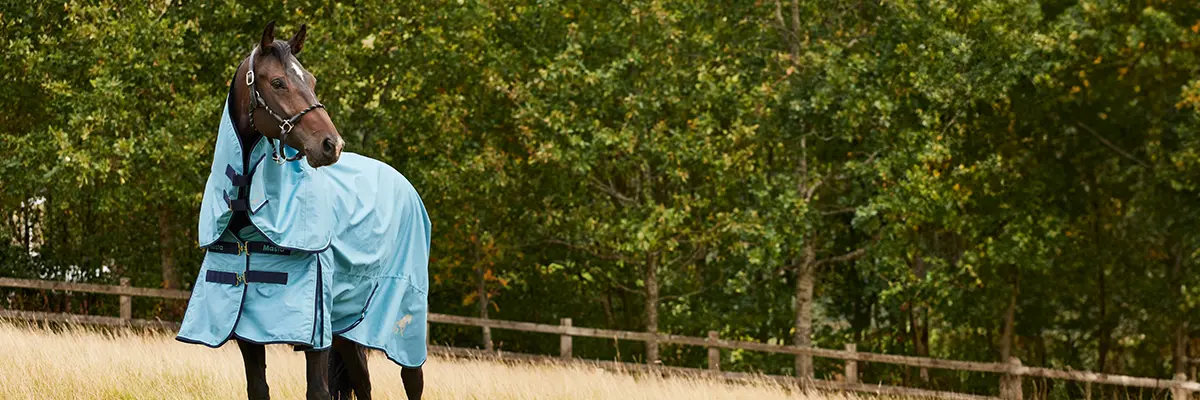
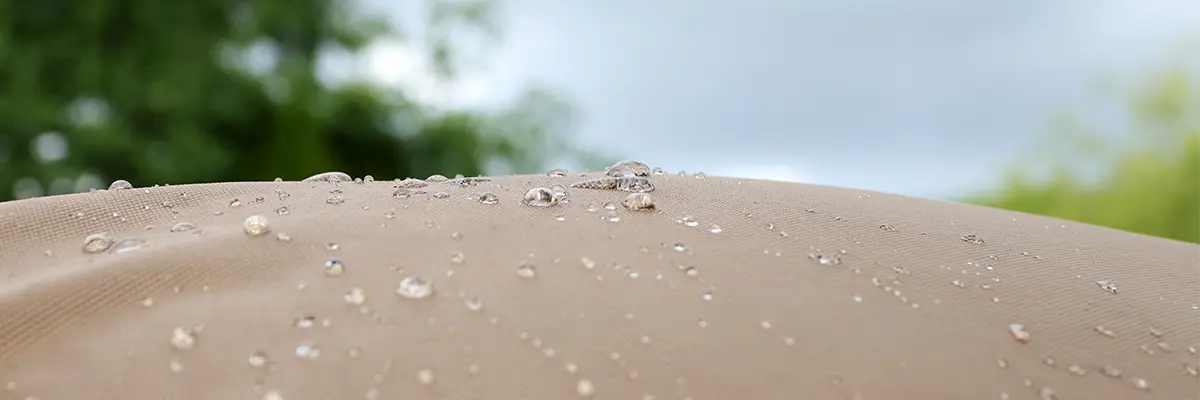
When we describe a turnout rug as ‘waterproof’, there’s quite a lot of technology behind that single word. A quality waterproof rug relies on three layers of protection working together: the outer fabric, a waterproof membrane and taped seams.
The outer fabric is your rug’s first point of contact with the rain. Measured in denier (D), this refers to the strength and durability of the fabric - not its waterproof capability. A 1200D rug is tougher and more tear-resistant than a 600D rug, which matters if your horse is hard on rugs or lives out with boisterous companions. But a higher denier does not automatically mean a more waterproof rug. This is one of the most common misconceptions in rug buying.
“I saw a Horse and Hound article on waterproofing versus denier and Harry Hall actually share the water pressure tests to show how waterproof their rugs are. I’d always assumed it was about denier!” - Verified Fieldmasta customer, Reviews.io
The waterproof membrane is coated onto the inside of the outer fabric and is what actually stops water from penetrating through to your horse. This membrane contains microscopic holes that are smaller than a water molecule but large enough to allow water vapour (perspiration) to escape. It’s this balance between keeping water out and letting moisture through that defines a rug’s overall weather performance.
Taped seams complete the system. Every stitch point in a rug creates a potential entry point for water, so quality turnout rugs use waterproof tape on the inside of each seam to prevent rain from tracking through. Without this, even the best membrane won’t keep your horse dry in sustained rainfall.
What Is Hydrostatic Head and Why Does It Matter?
Waterproof performance in horse rugs is measured using a hydrostatic head (HH) test. In this test, the fabric is pulled tight beneath a sealed tube of water one inch in diameter. It’s then observed over 24 hours to determine how many millimetres of water the fabric can withstand before moisture begins to soak through. The point at which water penetrates the fabric gives you the hydrostatic head rating, measured in millimetres.
The British Standard for waterproof horse rugs requires a minimum HH rating of 1,500mm. To put that into context, moderate rainfall exerts roughly 1,000–2,000mm of pressure on fabric - so a rug meeting only the minimum standard may struggle in prolonged or heavy rain. Wind-driven rain increases that pressure significantly, which is why higher-rated fabrics offer a real advantage in exposed conditions.
All Masta turnout rugs - whether 600D, 1200D or 1680D - use the same quality waterproof and breathable technology, hydrostatic head tested to a minimum of 5,000mm. That’s more than three times the British Standard minimum, meaning the fabric can withstand the equivalent of five metres of water pressure before any moisture passes through. In practical terms, this gives you significantly more protection during prolonged downpours and the kind of sideways rain the UK does so well.
Hydrostatic Head Ratings: What the Numbers Mean
| HH Rating | Protection Level | Suitable For |
|---|---|---|
| 1,500mm | British Standard minimum | Light, short showers only |
| 3,000mm | Good standard protection | Moderate rainfall, average conditions |
| 5,000mm | High performance (all Masta rugs) | Prolonged rain, wind-driven weather, heavy storms |
Breathability: Why a Waterproof Rug Can Still Leave Your Horse Wet
One of the most common concerns we hear from horse owners is: “My horse was wet under the rug after a day out in the field - the rug must have leaked.” It’s an understandable assumption, but more often than not, the moisture is coming from the inside, not the outside.
Breathability refers to a rug’s ability to allow water vapour - perspiration - to escape through the fabric. Even at rest, horses generate body heat and moisture. If that moisture can’t escape, it condenses on the inside of the rug, leaving the horse’s coat damp. This is particularly common in milder, humid conditions where the temperature difference between the horse’s body and the outside air is smaller, reducing the natural pressure gradient that drives moisture through the membrane.
The waterproof membrane used to coat the rug has tiny holes that are smaller than a water molecule. This allows air to circulate without water coming in. However, if your horse is exposed to constant heavy rain, the external water can effectively block those holes, reducing the membrane’s ability to release moisture from underneath. The result is a build-up of condensation that can feel exactly like a leak.
How to Tell the Difference Between Condensation and a Genuine Leak
Condensation tends to create an even, light dampness across the horse’s back and body. The moisture feels warm and there are no obvious wet patches or drip lines. It’s more common in mild, humid weather and after periods of activity.
Rain ingress typically shows as concentrated wet patches, often along seam lines, at the withers (where water pools), around the neck opening or at the base of the tail. The moisture often feels cold and may correspond with visible damage, worn areas or seam failure on the rug’s outer surface.
If you’re unsure, a simple test is to lay the rug flat indoors, pour a small amount of water onto the outer fabric and leave it for 20 minutes. If water comes through, the waterproofing has degraded. If the outer fabric still beads water effectively, condensation is likely the culprit.
Wind, Fit and Rug Stability in Bad Weather
When the wind picks up, every weakness in a rug’s fit is exposed. A rug that sits well in calm conditions can shift, flap and twist in strong gusts, and this creates problems beyond just aesthetics. A poorly fitting rug that moves in the wind increases heat loss, causes rubbing and creates gaps where rain can get in - particularly around the chest, shoulders and neck.
This is why rug fit matters just as much as rug weight in stormy weather. A well-fitted rug sits close to the body without restricting movement. Key features to look for include:
Adjustable chest closures: these should hold the rug securely at the front without being so tight that they restrict the horse’s movement or rub. Masta’s front fastenings with quick-clip buckles allow you to fine-tune the fit to your horse’s chest shape, whether they’re broad or narrow.
Shoulder gussets: a well-designed gusset allows the rug to articulate with the horse’s movement in the field, preventing the fabric from pulling tight across the shoulder during grazing. This also reduces rug rubs, which are more common when the rug is shifting in windy conditions.
Belly surcingles and leg straps: these keep the rug anchored during wind and movement. Cross-belly surcingles prevent the rug from blowing up, while rear leg straps or a fillet string stop it shifting forwards. If these are too loose, the rug can lift and flap; too tight, and they restrict natural movement and cause discomfort.
Neck covers: in exposed conditions, a combo neck or detachable neck cover provides additional protection against wind-driven rain reaching the mane, crest and upper body. The Fieldmasta range features a unique dome neck design that takes pressure off the mane, increases air circulation and helps prevent mane loss - a common frustration during the long winter months.
“Literally the best range of rugs I have ever bought. I have three very different shaped horses — big shoulders, short backed, high withers — and these rugs fit all. No rubs on any part and no mane loss.” - Verified Fieldmasta customer, Reviews.io
Temperature, Weather and Rug Choice: It’s Not Just About the Thermometer
One of the biggest shifts in thinking we’d encourage horse owners to make is moving away from a purely temperature-based approach to rugging and towards a temperature-plus-conditions mindset. The thermometer is a starting point, not the whole story.
Horses are naturally well-equipped to regulate their own body temperature. Their thermoneutral zone sits between roughly 0°C and 25°C, and a healthy horse with a full winter coat can be remarkably comfortable in dry, still cold. The challenge comes when you add rain, wind or humidity to the equation. Wet conditions dramatically increase heat loss because moisture conducts heat away from the body far more efficiently than air. Wind compounds this by stripping away the layer of warm air trapped in the horse’s coat or rug fill.
This means that a calm, dry day at 2°C may actually feel more comfortable for your horse than a wet, windy day at 8°C. And it’s precisely these mild but wet conditions where owners are most likely to either over-rug for warmth they don’t need, or under-estimate the wind chill factor and leave a horse inadequately protected from rain.
Weather Conditions and Rug Selection: A Practical Guide
| Conditions | Unclipped (Turnout) | Clipped (Turnout) |
|---|---|---|
| Warm + dry (15°C+) | No rug | No rug |
| Mild + dry (10–15°C) | 0g waterproof turnout if showers expected | 0g–100g waterproof turnout |
| Mild + wet + windy (10–15°C) | 0g–100g waterproof turnout — prioritise waterproofing over fill weight | 100g–200g waterproof turnout; consider a neck cover |
| Cool + dry (5–10°C) | 0g–100g turnout | 100g–200g turnout |
| Cool + wet + windy (5–10°C) | 100g–200g waterproof turnout; consider a neck cover | 200g–300g waterproof turnout with neck cover |
| Cold + dry (0–4°C) | 100g–200g turnout | 200g–300g turnout |
| Cold + wet + windy (0–4°C) | 200g–300g waterproof turnout with neck cover | 300g–400g waterproof turnout with neck cover |
| Severe / stormy (below 0°C) | 200g–300g waterproof turnout with neck cover; consider layering | 300g–400g waterproof turnout with neck cover; consider a rug liner |
Important: Every horse is different. Age, breed, body condition, workload and whether your horse is clipped all play a role. A veteran Thoroughbred and a hardy native cob in the same field may need completely different rugging approaches in the same weather. Use the table above as a guide, not a rule — and always assess your individual horse.
When Weather Exposes Rug Failure
Storms and prolonged wet weather are the ultimate stress test for any turnout rug. They’re also when most owners first notice that a rug isn’t performing as it should. Here are the key signs to look out for, and what to do about them.
Signs That Waterproofing Has Degraded: If water no longer beads and rolls off the outer fabric - instead soaking into the surface and darkening the material - the durable water repellent (DWR) finish on the outer layer has worn off. This doesn’t necessarily mean the membrane underneath has failed, but it does mean the outer fabric is absorbing water rather than shedding it, which adds weight, reduces breathability and puts more pressure on the membrane over time.
A reproofing spray applied to the outer fabric can restore the DWR finish and improve water beading. However, if the membrane itself has failed - shown by water actively passing through the fabric in the test described above - reproofing the surface won’t fix the problem. At that point, the rug needs replacing.
The Impact of Washing on Waterproofing
One of the biggest factors in premature waterproof failure is incorrect washing. Before deciding to wash your rug, first assess whether it’s truly necessary. If you can brush off dried mud and wipe grease from the lining with a hot, soapy cloth, not washing your rug is often the best thing you can do to extend its lifespan. Every wash - particularly at high temperatures or with biological detergents - degrades the waterproof treatment a little further.
If you do need to wash your rug, hand wash at a cool temperature using non-biological soap. Never tumble dry - always dry naturally, away from direct heat. Reshape the rug whilst damp and ensure any memory foam padding lies flat before the rug dries fully. Once completely dry, store in a cool, dry place.
Alternatively, a professional rug cleaning service with specialist equipment can clean your rug while minimising damage to the waterproof treatment. And one practical tip: step away from the pressure washer! High-pressure water will break down the membrane and leave you with a rug that’s no longer fit for purpose.
“The quality is very good and most importantly it IS waterproof. This is about the 10th Fieldmasta rug I have and I will continue to purchase them.”
Verified Fieldmasta customer, Reviews.io

Should You Change Rugs Immediately After Heavy Rain?
Not necessarily. If the rug’s waterproofing is performing well and the horse is dry underneath, the rug is doing its job — even if the outer fabric looks wet. Outer fabrics are designed to handle rain; that’s what they’re for. The key question is always what’s happening underneath.
If the horse feels damp but warm under the rug, condensation is likely the cause, especially if the weather has been humid. Allow the rug to dry naturally, and consider whether the weight you’ve chosen is right for the conditions - an over-rugged horse will sweat more, increasing the condensation problem.
If the horse is cold and wet underneath, and you can see seam leakage or water tracking, that’s a genuine failure and the rug needs attention. Repeated soaking without drying accelerates waterproof degradation, so don’t keep using a rug that’s consistently letting water through.
Alot of horse owners find the fastest way to dry a turnout rug which is wet on the outer is to leave it on their horse - the horses body temperature helps accerlerate the drying process.
Choosing Rugs for UK Weather: Practical Takeaways
Different weather conditions demand different priorities from your rug. Here’s a quick summary of what to focus on:
For prolonged rain: Prioritise a high hydrostatic head rating (5,000mm+), fully sealed seams and a breathable membrane. A combo neck or detachable neck cover adds extra rain protection across the topline.
For wind-driven weather: Fit and stability are everything. Make sure chest closures are snug, surcingles are correctly adjusted and leg straps or fillet strings are in place. A flapping rug loses heat, causes rubs and lets rain in.
For mild but wet conditions: Don’t over-rug. A lightweight 0g–100g waterproof turnout will provide rain protection without causing overheating and excessive condensation. Breathability matters more than fill weight here.
For cold, dry spells: An unclipped horse with a full coat may not need a rug at all in dry cold. If your horse is clipped, choose a rug based on weight and warmth rather than waterproofing.
A final note from our expert
“At Masta, every rug begins with a promise to protect and care. With nearly 50 years of experience - and as horse owners ourselves - we design with the horse’s wellbeing at the heart of every decision. We test our prototype designs across a wide range of breeds, from Welsh ponies to Irish Drafts, and always in real-world conditions. On the exposed hills of Yorkshire, through wind, rain and mud, we push every rug to its limits. Because if it performs here, it’ll perform anywhere.”
— Alice, Rug Developer, Masta
Shop the Range
Ready to find the right rug for your horse? Browse our full collection of waterproof turnout rugs built to handle everything the British weather throws at them, or explore our lightweight turnout rugs for those milder, showery days where rain protection matters more than warmth. You can shop the full Masta collection here.